
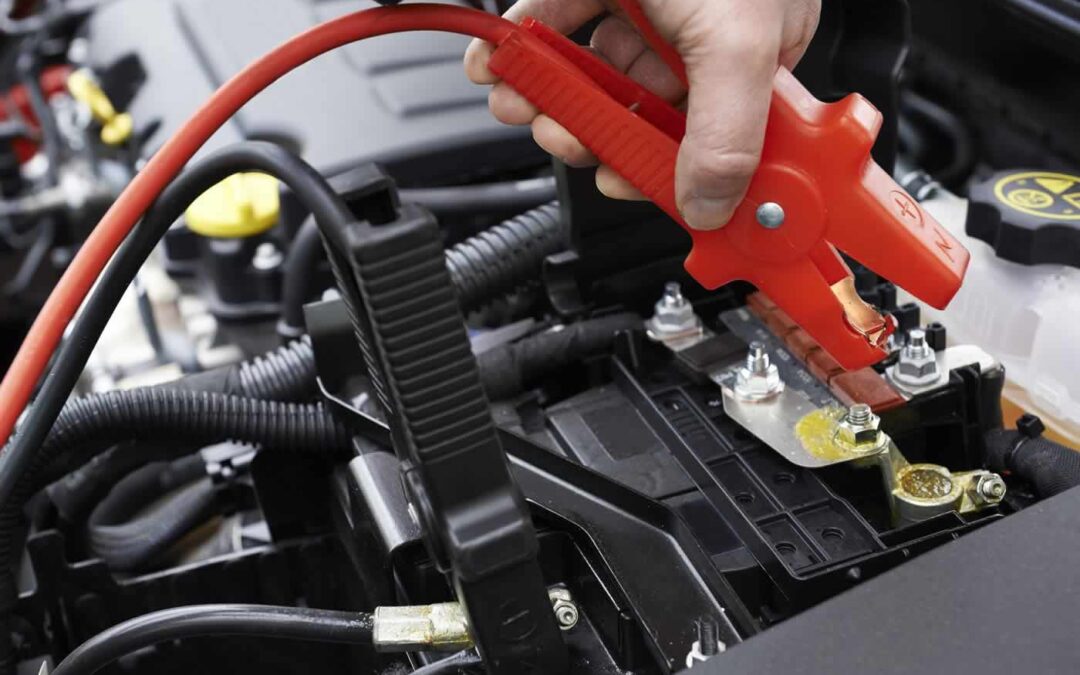
A flat car battery is one of those problems that always seems to happen at the worst possible time: outside the house on a wet morning, in a supermarket car park after work, or at the airport when you just want to get home. In Dublin, battery trouble is especially common because many drivers combine short urban journeys with heavy traffic, damp weather, cold starts and long periods of electrical use while the engine is barely running.
The good news is that a flat battery is often predictable. Long before the car refuses to start, it may give small warning signs: slower cranking, dimmer lights, dashboard messages, stop-start not working, or a battery that struggles after the car has been parked for a couple of days. Spotting those signs early can save you the stress of waiting for help at the roadside.
This guide explains why batteries fail in Irish driving conditions, how Dublin traffic affects battery health, what to watch for in modern vehicles, and when it is smarter to test or replace a battery rather than waiting for another jump start.
Why flat batteries are so common in Dublin
A car battery is not only responsible for starting the engine. It also supports alarms, immobilisers, central locking, onboard computers, lights, infotainment systems, sensors, heated screens and, in newer vehicles, increasingly complex control modules. Even when the car is parked, small amounts of power are used to keep systems active.
In ideal conditions, the alternator replenishes the battery while you drive. But Dublin driving is rarely ideal. A typical journey might involve five minutes to the school gate, ten minutes in slow traffic, a stop at a shop, another short trip home, and then the car sitting overnight in cold damp air. That pattern uses a lot of battery energy to start the engine but may not provide enough steady driving time to put the charge back in.
Over time, the battery becomes undercharged. It may still start the car on a mild afternoon, but it can fail on a cold morning when the engine needs more power to turn over. This is why many Dublin drivers only discover a weak battery when the weather changes or after the car has been sitting unused for a weekend.
The main causes of a flat battery
1. Short journeys that do not recharge the battery
Starting a car takes a strong burst of power. If you then drive for only a few minutes, especially at low speeds with lights, wipers, heaters and demisters on, the alternator may not fully replace what was used. Repeating this pattern daily slowly reduces the battery’s state of charge.
For example, a driver in Rathmines who uses the car mainly for short school runs and local shopping may have more battery trouble than a commuter who drives 40 minutes on the motorway each day. The first car may start more often, travel less distance, and spend more time in stop-start traffic. The second car gives the charging system a better opportunity to recover.
2. Cold, damp Irish weather
Cold weather reduces battery performance. At the same time, engines are harder to turn over because oil is thicker and mechanical parts need more effort to move. That means the battery has less available power just when the vehicle demands more from it.
Damp weather can also expose weaknesses in electrical connections, terminals and older wiring. Moisture itself may not be the direct cause of a flat battery, but it can contribute to poor connections, corrosion and intermittent electrical issues. If your car struggles more after wet nights, it is worth having the battery and charging system checked rather than assuming it is just bad luck.
3. Leaving lights or accessories on
Interior lights, boot lights, parking lights, dash cameras, phone chargers, cool boxes and aftermarket accessories can drain a battery if left on for long enough. Some modern cars switch accessories off automatically, but not all do, and a weak battery has less reserve capacity than a healthy one.
A common example is a boot or glovebox light that stays on because the latch or switch is faulty. The driver may never see the light, but it quietly drains the battery overnight. Another example is a dashcam hardwired to record while parked. If the voltage cut-off is set incorrectly, it can leave the car without enough power to start.
4. Ageing batteries
Car batteries do not last forever. Many last around three to five years, although this varies depending on vehicle type, usage, battery quality and maintenance. A battery that has survived several winters may appear fine in summer but fail when temperatures drop.
If your battery is older and has already needed a jump start, take that seriously. A single flat battery caused by leaving lights on may not mean replacement is needed. But repeated flat batteries, slow starts and warning messages usually mean the battery is near the end of its useful life or the charging system needs attention.
Warning signs your battery is getting weak
Most batteries give clues before they fail completely. Watch for these signs, especially in autumn and winter:
- The engine turns over more slowly than usual.
- You hear clicking when you turn the key or press the start button.
- Dashboard lights flicker or dim during starting.
- The car starts fine after a long drive but struggles after short trips.
- The stop-start system stops working or displays a battery-related message.
- Electrical features behave strangely, such as windows moving slowly or radio settings resetting.
- The battery warning light appears while driving.
- The car needs a jump start more than once.
One warning sign on its own does not always prove the battery is faulty. A slipping alternator belt, poor earth connection, parasitic drain or starter motor problem can produce similar symptoms. However, these signs should prompt a proper battery and charging system test before the car leaves you stranded.
Seasonal battery strain: why winter is not the only problem
Battery failures are often associated with winter, and for good reason. Cold mornings expose weak batteries. Drivers also use more electrical equipment: headlights, heated rear screens, blowers, heated seats, wipers and demisters. If the car is making short trips in traffic, the battery may never fully recover.
However, summer can also be hard on batteries. Heat accelerates chemical ageing inside the battery. A battery weakened during hot weather may not actually fail until the first cold snap months later. This is why a car that seemed reliable in August can suddenly refuse to start in November.
In Dublin, the shoulder seasons can be particularly awkward. Autumn brings darker evenings, more rain and more electrical load. Spring may bring cars back into regular use after periods of lighter winter driving. If a battery is marginal, these changes in driving pattern can tip it over the edge.
Start-stop vehicles need the right battery
Many modern cars use automatic stop-start systems that switch the engine off when the vehicle is stopped and restart it when the driver moves off. These systems reduce fuel use, but they also place extra demands on the battery. A start-stop vehicle may restart the engine many times during a single Dublin commute.
Because of this, start-stop vehicles normally require enhanced battery technology such as AGM or EFB batteries, depending on the manufacturer specification. Fitting the wrong type can cause poor performance, warning lights, disabled stop-start operation or premature battery failure.
Some newer cars also need battery registration or coding after replacement, so the vehicle’s charging system knows a new battery has been fitted. Without this, the car may continue to charge as if the old battery is still installed, which can shorten battery life or cause electrical issues. If you drive a start-stop car, do not treat battery replacement as a one-size-fits-all job.
Can an electric vehicle get a flat battery?
Yes. Electric vehicles have large high-voltage traction batteries, but they also have a smaller 12-volt battery that powers many control systems, locks, screens and startup functions. If the 12-volt battery fails, the EV may not “wake up” even when the main battery has charge.
EV battery issues can be more confusing because the car may not behave like a petrol or diesel vehicle with a traditional starter motor. If you drive an EV and are unsure whether the issue is the 12-volt system, the main battery, charging equipment or software, it is best to get proper assistance. For more EV-specific guidance, read our guide to electric car breakdown and towing in Dublin.
How to avoid needing a jump start
Drive long enough to recharge the battery
If most of your driving is local, add a longer run when possible. A steady drive of 30 minutes or more can help the charging system replenish the battery, especially after several short journeys. This does not guarantee a weak battery will recover, but it can help maintain a healthy one.
Switch off electrical loads before turning off the engine
Before switching off, turn off heated seats, demisters, lights and other accessories if they are not needed. Many cars manage this automatically, but building the habit helps reduce unnecessary drain. It also means the battery has less demand placed on it when you next start the car.
Check lights, boot latches and accessories
After parking, take a quick look back at the car. Are the lights off? Is the boot fully closed? Has a phone charger, dashcam or accessory been left powered? Small checks can prevent a morning breakdown.
Keep battery terminals clean and secure
Corroded or loose terminals can prevent power flowing properly even when the battery has charge. If you notice white or blue-green corrosion around the terminals, have it cleaned safely. Do not ignore loose clamps, damaged cables or signs of acid leakage.
Use a maintenance charger if the car sits unused
If your vehicle is parked for long periods, especially over winter or while you work from home, a smart maintenance charger can help keep the battery healthy. This is different from a basic charger left connected indefinitely. A suitable smart charger monitors the battery and maintains it safely. Always follow the vehicle and charger instructions, and be careful with vehicles that have complex electronics.
When should you test or replace a battery?
You should consider a battery test if the car is slow to start, if the battery is more than three years old, if the vehicle has been parked for a long time, or before winter if you depend on the car daily. A proper test checks more than voltage. It can assess cold cranking ability, state of health and whether the alternator is charging correctly.
Replace the battery if it fails a load test, cannot hold charge, is physically damaged, leaks, swells, or repeatedly goes flat despite normal use. Replacement is also sensible if the battery is old and unreliable, even if it can still be revived temporarily. A jump start may get you moving today, but it does not restore an ageing battery to new condition.
Remember that vehicle reliability is part of wider roadworthiness. The official NCT website explains that the National Car Testing Service is designed to support road safety and environmental standards in Ireland. While a battery test is not the same as an NCT inspection, maintaining your car’s electrical and starting system is still a practical part of keeping it dependable and safe for everyday use.
Is a jump start always safe?
A jump start can be safe when done correctly with suitable equipment, but it is not risk-free. Incorrect connection, poor-quality leads, voltage spikes or attempting to jump start a vehicle with deeper electrical faults can damage sensitive electronics. Modern vehicles contain control modules that are far less forgiving than older cars.
If you are unsure, do not guess. Check the vehicle handbook and follow the manufacturer’s procedure. Some cars have dedicated jump points under the bonnet even when the battery is located elsewhere. Connecting directly to the wrong point can create hazards or damage components.
If the car starts after a jump but cuts out shortly afterwards, shows warning lights, or will not restart after being switched off, the issue may be more than a simple discharged battery. At that point, you may need roadside assistance, recovery or a workshop diagnosis. If you are unsure what kind of help you need, our guide to breakdown recovery vs roadside assistance explains the difference.
What to do if your battery is flat right now
If your car will not start, stay calm and work through the situation safely. First, make sure the vehicle is in a safe place. If you are on a road, put on hazard lights if possible and keep passengers away from traffic. If you are in a car park or driveway, avoid repeated start attempts because this can drain the battery further and may stress the starter motor.
Check whether obvious electrical items were left on. Listen for the type of failure: a rapid clicking sound often points to low battery power, while a single heavy click may suggest a starter or connection issue. No lights at all can mean a severely discharged battery, loose terminal or another electrical fault.
If you get a safe and correct jump start, let the engine run and ideally drive long enough to recharge. Do not assume the problem is solved if the battery is old or has failed before. If it goes flat again, book a test or replacement. If the vehicle cannot be restarted, needs moving from a dangerous location, or has additional faults, towing may be required. You can learn more about what affects the process in our article on car towing in Dublin and Ireland.
Practical Dublin examples
The school-run battery
A car is used for two or three short trips per day, rarely travelling more than a few kilometres. In winter, the driver uses lights, wipers, heater fan and heated rear screen every morning. The car starts slowly on Monday, clicks on Wednesday and is completely flat by Friday. In this case, the short journey pattern has likely kept the battery undercharged, and if the battery is older, replacement may be needed.
The airport parking surprise
A car starts fine before a holiday but sits for ten days with the alarm and onboard systems active. When the driver returns, the doors unlock slowly and the engine will not turn over. This may be a simple discharge, but if the battery is weak, the long parked period reveals the problem. A battery test after the jump start is the sensible next step.
The modern start-stop warning
A driver notices the stop-start system has stopped working, but the car still starts. Weeks later, the vehicle struggles on cold mornings. The disabled stop-start system may have been an early clue that the battery state of charge or health was below the level required by the vehicle. Testing early could have prevented the later no-start situation.
Conclusion: prevent the flat battery before it strands you
Flat batteries are common in Dublin because local driving often combines short trips, slow traffic, cold damp weather and high electrical demand. Modern cars also rely heavily on battery power, even before the engine starts. That means a weak battery can quickly become a roadside problem.
The best approach is preventative: notice slow starts, test older batteries, avoid unnecessary electrical drain, take longer drives when possible, and replace a failing battery before it leaves you stuck. A jump start can get you moving, but it should not be treated as a permanent fix if the underlying issue remains.
If your car is already refusing to start, focus on safety first and get the right help for the situation. Whether it is a simple battery issue, roadside assistance or recovery, acting early can save time, reduce stress and help protect your vehicle’s electronics.