
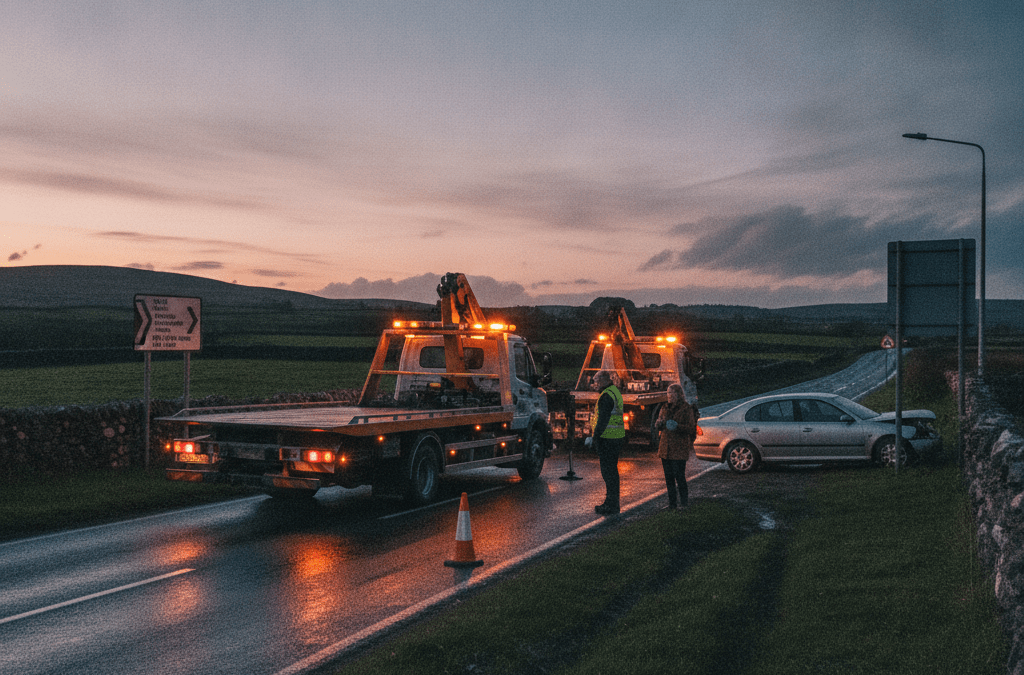
A vehicle breakdown rarely happens at a convenient time. One minute you are driving to work, collecting the family, heading to a ferry, or travelling home after a long day; the next, you are on the hard shoulder or stuck in a car park wondering who to call. When searching for help, two phrases often appear together: roadside assistance and breakdown recovery. They sound similar, and in everyday conversation many people use them interchangeably, but they are not exactly the same service.
Understanding the difference can save you time, stress, and money when your vehicle will not move. Roadside assistance generally focuses on fixing a minor fault at the location where the problem occurs. Breakdown recovery, on the other hand, is about transporting your vehicle safely when it cannot be repaired there and then. In real life, the two services often work together: a technician may try to get you going first, and if that is not possible, a recovery truck may be required.
This guide explains the difference between breakdown recovery and roadside assistance in practical terms. We will look at what each service includes, when you are likely to need one over the other, common examples, what to do while waiting for help, and how to choose the right provider for your needs.
What Is Roadside Assistance?
Roadside assistance is a service designed to help drivers with minor vehicle problems at the roadside, in a driveway, at work, or in another accessible location. The main aim is simple: diagnose the issue and, where possible, get the vehicle moving again without the need for towing or transport.
Typical roadside assistance jobs include flat batteries, jump starts, minor electrical issues, tyre changes where a safe spare is available, fuel problems, and simple faults that can be handled quickly. The technician will usually assess the situation, explain what they can do, and attempt a temporary or permanent fix depending on the problem.
For example, if you return to your car after leaving the lights on and the battery is flat, roadside assistance may be enough. The vehicle can often be jump started and tested. If the battery holds charge and the alternator appears to be working, you may be able to continue your journey. Likewise, if you have a puncture and your spare wheel is in good condition, a roadside technician may be able to fit it so you can drive to a tyre centre.
The key point is that roadside assistance is usually about solving a problem where the vehicle is located. It is useful when the vehicle is fundamentally safe to continue using once the immediate fault has been addressed. However, not every fault can be fixed at the roadside, and not every location is safe enough for repairs. That is where breakdown recovery becomes important.
What Is Breakdown Recovery?
Breakdown recovery is the process of moving a vehicle that cannot be safely driven. Instead of focusing only on a roadside fix, recovery focuses on safe transport. A recovery operator uses suitable equipment, such as a recovery truck, tow truck, winch, or vehicle transporter, to move the car, van, motorcycle, or other vehicle to a chosen destination.
That destination might be your home, a local garage, a dealership, a tyre centre, a secure storage facility, or another agreed location. The exact service depends on the situation, vehicle type, access, safety conditions, and the customer’s preference. The important distinction is that the vehicle is not expected to continue the journey under its own power.
Breakdown recovery is needed when the issue is more serious than a minor roadside fault. Examples include clutch failure, engine overheating, suspected timing belt problems, accident damage, steering or suspension failure, severe tyre damage without a usable spare, gearbox faults, warning lights that indicate the vehicle should not be driven, or any situation where driving could make the damage worse or put people at risk.
Recovery can also be required when a vehicle is in an unsafe location. Even if the fault might be simple, working on a car beside fast-moving traffic may not be appropriate. In that case, the safest option may be to recover the vehicle to a safer place before any further inspection or repair is attempted.
The Main Difference in One Sentence
The simplest way to remember the difference is this: roadside assistance tries to get your vehicle moving again where it is, while breakdown recovery moves your vehicle when it cannot or should not be driven.
That distinction matters because the right response depends on the type of problem. A flat battery in a safe driveway is very different from a vehicle with engine failure on a busy road. In the first case, a quick roadside fix may be all you need. In the second, a recovery truck may be the safest and most practical option.
Roadside Assistance: Common Situations Where It Helps
Flat or Weak Battery
Battery trouble is one of the most common reasons drivers request roadside help. Cold weather, short journeys, interior lights, older batteries, and charging system issues can all leave a car unable to start. If the vehicle is otherwise in good condition, a jump start or battery check may resolve the immediate problem.
However, if the vehicle cuts out again, will not hold charge, or shows signs of alternator failure, recovery may be needed. Continuing to drive with a charging fault can leave you stranded again in a worse location.
Flat Tyre With a Usable Spare
If you have a puncture and your vehicle has a roadworthy spare wheel, roadside assistance may be enough. The technician can fit the spare and help you get back on the road. This is usually a temporary solution, as many spare wheels are space savers with speed and distance limits.
If there is no spare, the locking wheel nut key is missing, the wheel is badly damaged, or the vehicle is in a dangerous location, recovery may be the better option. Modern vehicles often come with tyre inflation kits rather than spare wheels, and those kits do not always work for sidewall damage or large punctures.
Running Out of Fuel
Running out of fuel is frustrating, but it can often be solved without recovering the vehicle. Depending on the location and vehicle type, assistance may involve bringing enough fuel to get you to a filling station or helping arrange a safe solution.
Diesel vehicles can sometimes be more complicated if air enters the fuel system. In some cases, the vehicle may need priming or further attention. If it will not restart safely, recovery to a garage may be necessary.
Minor Starting or Access Problems
Some problems are inconvenient but not necessarily major mechanical failures. A vehicle may refuse to start because of a simple connection issue, a battery terminal problem, or an immobiliser-related concern. Roadside assistance may help identify the cause, but if the issue cannot be resolved quickly or safely, recovery becomes the next step.
Breakdown Recovery: Common Situations Where It Is Needed
Engine Failure or Overheating
If your engine overheats, loses oil pressure, makes loud knocking noises, or displays a serious warning light, driving further can cause expensive damage. In these situations, the safest decision is usually to stop, switch off the engine when safe to do so, and arrange recovery.
Overheating is a good example. Some drivers are tempted to continue for just a few more minutes, especially if they are close to home. Unfortunately, that short distance can turn a manageable cooling system issue into a major engine repair. Recovery helps prevent further damage and gets the vehicle to a garage where it can be inspected properly.
Clutch, Gearbox, or Transmission Problems
A vehicle that will not select gears, has a failed clutch pedal, slips badly, or loses drive is not suitable for normal driving. Even if it moves a short distance, it may become stuck in traffic or fail at a junction. Breakdown recovery is usually required to move the vehicle safely to a repairer.
Accident Damage
After a collision, a vehicle may appear drivable at first glance, but hidden damage can make it unsafe. Steering, suspension, brakes, wheels, lights, cooling systems, and airbags can all be affected. If there is any doubt, recovery is the cautious and sensible choice. A professional recovery operator can remove the vehicle from the scene and transport it to a garage or storage location.
Severe Wheel, Tyre, or Suspension Damage
A badly damaged wheel, broken suspension component, or tyre blowout can make a vehicle unstable and unsafe. Even if the engine runs perfectly, the vehicle should not be driven if the wheels, steering, or suspension are compromised. Recovery is the right service because the problem is about safe transport, not simply restarting the vehicle.
Practical Examples: Which Service Do You Need?
Imagine you are at home in the morning and your car will not start. The dashboard lights are dim and you hear clicking when you turn the key. This sounds like a battery issue. Roadside assistance may be appropriate because the vehicle is in a safe place and a jump start or battery test may get you moving.
Now imagine you are driving and the temperature gauge rises quickly into the red. Steam appears from under the bonnet and a warning light comes on. This is not a roadside inconvenience; it is a mechanical risk. You should stop safely and arrange breakdown recovery rather than continuing to drive.
Another example: you hit a pothole and the tyre goes flat. If you are in a safe car park with a good spare wheel, roadside assistance may solve it. If you are on a narrow road with no safe working space, or if the wheel itself is cracked, recovery may be required.
Finally, consider a van that loses clutch pressure while carrying tools or equipment. It may still roll, but it cannot be controlled properly in traffic. That situation calls for recovery because the vehicle cannot be driven safely and may need specialist loading depending on its size and condition.
Why the Difference Matters for Safety
The difference between roadside assistance and breakdown recovery is not just technical. It affects safety. A roadside repair may be convenient, but only if it can be done without putting the driver, passengers, technician, or other road users at risk. Fast roads, poor visibility, bad weather, blind bends, and narrow hard shoulders can make even simple repairs dangerous.
If you break down, your first priority should always be safety, not the vehicle. Move to a safe location if you can do so without causing further risk. Switch on hazard lights. If you are on a motorway or busy road, leave the vehicle from the safest side if it is safe to do so and stand well away from traffic. Keep passengers, children, and pets protected. Do not attempt repairs in a dangerous position.
A good recovery provider will consider the location as well as the fault. Sometimes the correct decision is to move the vehicle first and investigate later. That approach can reduce risk and prevent a stressful breakdown from becoming a more serious incident.
Does Roadside Assistance Include Recovery?
In some service packages, roadside assistance and recovery are bundled together. In others, they are separate. That is why it is important to read the details of any cover you have. Some policies may include a call-out and local tow, while others may limit the distance, destination, vehicle type, or number of call-outs. There may also be restrictions if the vehicle is not taxed, insured, roadworthy, or accessible.
If you do not have a membership policy, you can still contact a recovery company directly for help. Direct recovery can be useful when you need immediate support, when your policy does not cover the situation, or when you want the vehicle brought to a specific garage. Before agreeing to a service, it is reasonable to ask what is included, where the vehicle can be brought, and whether any additional charges may apply for distance, waiting time, difficult access, or special equipment.
What to Tell a Recovery or Assistance Provider When You Call
The more accurate information you provide, the easier it is to send the right help. Start with your location. Give the road name, nearby junction, landmark, Eircode if available, direction of travel, and any details that help identify where you are. If you are on a motorway or dual carriageway, mention the direction and nearest exit or marker if you can see one safely.
Next, describe the vehicle. Include the make, model, colour, registration, whether it is a car, van, 4×4, motorcycle, or commercial vehicle, and whether it is automatic or manual. Mention if it is lowered, heavily loaded, has locked wheels, has accident damage, or cannot be put into neutral. These details can affect the equipment needed.
Then explain the problem clearly. Did the vehicle fail to start, cut out while driving, overheat, lose a tyre, show a warning light, or suffer accident damage? Can it roll? Are the wheels straight? Is there smoke, leaking fluid, or a burning smell? Is anyone injured or in immediate danger? These answers help the operator decide whether roadside assistance is appropriate or whether recovery should be sent straight away.
Cost Considerations: Assistance vs Recovery
Costs can vary depending on the service required. Roadside assistance may be less expensive when the issue is resolved quickly at the location. Recovery can cost more because it involves specialist equipment, loading, transport distance, and sometimes additional time at the destination. However, choosing the cheaper option is not always the best decision if the vehicle is unsafe or likely to suffer further damage.
For example, paying for recovery after an overheating warning may feel inconvenient, but it can be far cheaper than replacing an engine damaged by continued driving. Similarly, towing a vehicle with a serious suspension fault protects both the vehicle and other road users. Value is not only about the call-out price; it is about getting the right solution for the situation.
How to Choose the Right Service
If you are unsure whether you need roadside assistance or breakdown recovery, think about three questions. First, is the vehicle in a safe place for someone to work on it? Second, does the problem seem minor and fixable, such as a flat battery or wheel change? Third, if the vehicle starts or moves, would it be safe and sensible to continue driving?
If the answer to any of those questions is no, recovery is likely to be the better option. A reputable operator can talk through the situation and advise what type of support is suitable. In many cases, the safest approach is to assume recovery may be needed until the vehicle has been assessed.
For drivers, the best preparation is to keep essential details handy. Save a trusted recovery number in your phone, know whether your vehicle has a spare wheel or inflation kit, keep your locking wheel nut key in the car, and pay attention to warning lights. It is also wise to avoid delaying maintenance. Batteries, tyres, coolant, oil, and brakes all play a major role in preventing breakdowns.
Conclusion: Roadside Fix or Vehicle Recovery?
Roadside assistance and breakdown recovery are closely related, but they serve different purposes. Roadside assistance is best for minor faults that can be safely dealt with where the vehicle is located. Breakdown recovery is needed when the vehicle cannot be repaired at the scene, cannot be driven safely, or must be transported to a garage, home, or secure location.
The most important thing is to make a safe decision. If the fault is minor and the location is safe, roadside help may get you back on your journey quickly. If there is any concern about mechanical damage, accident damage, unsafe road conditions, or the vehicle’s ability to continue, recovery is the responsible choice.
When in doubt, contact a professional recovery service, explain the situation clearly, and follow their guidance. The right support will protect you, your passengers, your vehicle, and other road users. A breakdown is always inconvenient, but knowing the difference between roadside assistance and breakdown recovery makes it much easier to get the correct help when you need it most.