When you ring CC Recovery on 085 783 9202, we need six things: where you are, what kind of vehicle it is, what is wrong with it, whether it can roll and steer, where it is going, and how to reach you. Have those ready and the call takes a couple of minutes, you get a price, and we are on our way from Dunshaughlin.
Why the call matters more than people think
A tow is simple once the truck is beside the car. The part that goes wrong is before that: a truck sent to the wrong road, the wrong equipment for a car with a seized wheel, or a van that turns out to be a long-wheelbase with a full load. Every one of those costs you time standing on a verge.
The fix is the phone call. Here is what we ask, and why.
1. Where you are, as precisely as you can
This is the one that matters most and the one people are vaguest about. “The road out of Navan” could be four different roads.
Good answers, in order of usefulness:
- An Eircode. If you are outside a house, a shop or a business, the Eircode on the sign or the post box is perfect.
- Your phone’s location. Open your maps app, press on your blue dot, and read us the coordinates or send them on.
- On the M3, N2 or M1: the direction you are travelling, the last junction you passed, and the number on the nearest blue marker post along the hard shoulder.
- On a country road: the nearest village, a pub, a church, a crossroads name, or what you passed a minute ago.
If you genuinely do not know, that is fine. Tell us where you set off from and where you were heading, and we will narrow it down together.
2. What the vehicle is
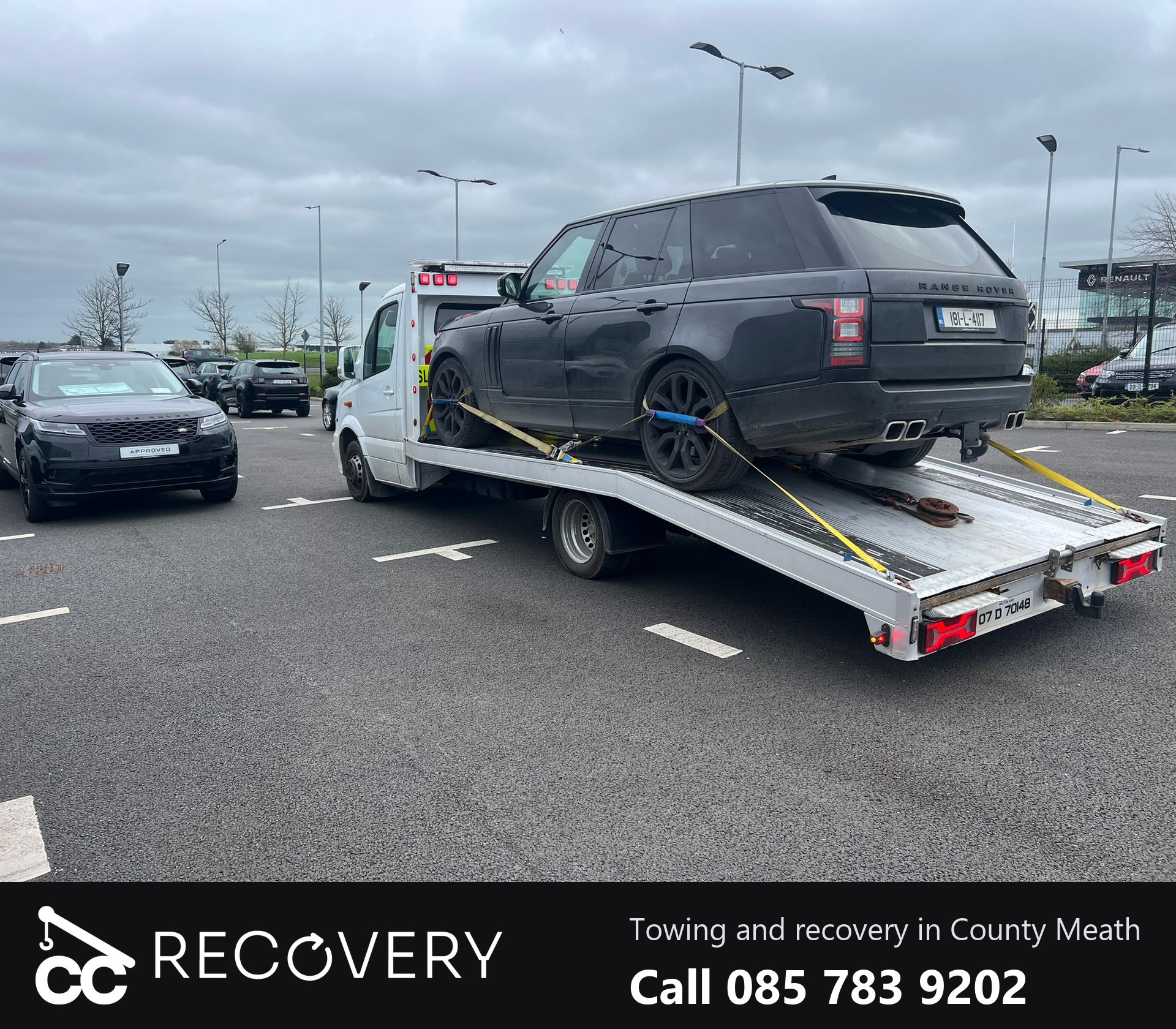
Make, model and roughly what size. A small hatchback, a seven-seater, a jeep, a van. If it is a van, tell us whether it is loaded. If it is a motorbike, say so straight away because that is a different setup on the truck.
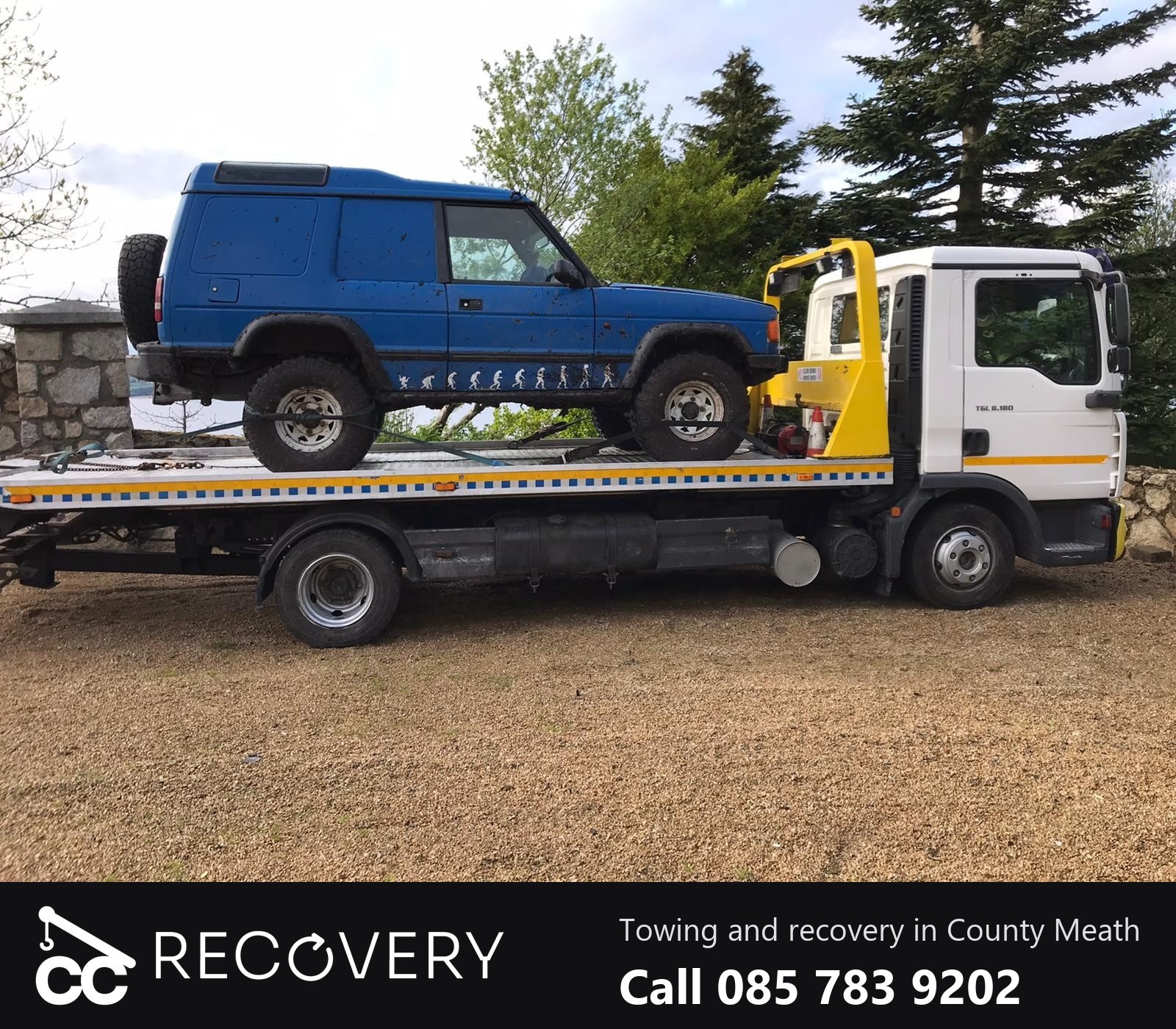
Also mention if it is automatic, electric, four-wheel drive, or lowered. Those change how we load it. An automatic that will not go into neutral, or a four-wheel-drive car, cannot simply be dragged onto the bed, so we need to know before we arrive.
3. What happened
You do not need to diagnose it. Just describe it.
- “It cut out and won’t restart.”
- “There’s a loud noise from the front wheel and it won’t turn.”
- “I hit the kerb and the wheel is sitting at an angle.”
- “It’s in the ditch, nose down.”
- “It drove fine, it’s just failed the NCT and I don’t want to drive it.”
Each of those tells us something different about the gear we bring and how long the loading will take. A car that rolls and steers goes on the bed in a few minutes. A car with a locked wheel or in a ditch needs skates, a winch or both.
4. Can it roll, can it steer, does the handbrake release?
Three quick questions. If you are not sure, that is a perfectly good answer. If you can check safely, try: does the gear lever move to neutral, does the steering wheel turn, does the handbrake come off. Do not do this if the car is on a slope or near traffic.
5. Where it is going
Have a destination in mind before you call, even a rough one:
- Your own garage, with the name and the town.
- Your home.
- A garage you have not booked yet, in which case we can suggest you ring them first so they know it is coming.
- Dublin, if that is where your mechanic or dealer is.
The destination sets the price. Our towing is from €150 + VAT plus €2 per km + VAT, so the kilometres we count are the tow itself. A short run to a garage in Ratoath is one figure; a run into Dublin is another. We tell you which before we move. The prices page lays this out.
6. How to reach you
The number you are calling from, and a second one if your battery is low. If someone else is with the car and you are not, give us their name and number too. Nothing is worse than arriving at an empty car with nobody to hand over the keys.
What we tell you back
Once we have the six answers, we give you:
- The price.
- A rough idea of where we are coming from, so you can plan.
- Anything we need you to do before we arrive: keys out, valuables out of the car, the gate open if you are at a house.
How you pay is up to you: cash, card read out on the call, or a pay link to your phone.
If anyone is hurt
Ring 999 first. Deal with people before the car. We can wait, and we will still come when you are ready.
Frequently asked questions
I don’t know what’s wrong with the car. Is that a problem?
No. Tell us what you saw, heard or felt, and we work it out from there. Most people who ring us have no idea what is wrong, and that is normal.
Should I ring my garage before I ring you?
If you have a regular garage, a quick call to them first is useful, because then you can tell us where the car is going. If you do not, ring us and we can talk through the options.
What if I can’t describe where I am?
Share your phone’s location, or tell us the last thing you recognised. On motorways, the blue marker posts on the hard shoulder are the best clue. We know the Meath roads well and will find you.
Can I send a photo?
Yes, and it helps, especially if the car is in a ditch or sitting at an odd angle. We will tell you on the call where to send it.
Call CC Recovery
Save 085 783 9202 in your phone now, before you need it. When the day comes, you will have the six things ready and we will have you sorted. Our contact page has the number too, and the breakdown recovery page explains what happens when we arrive.